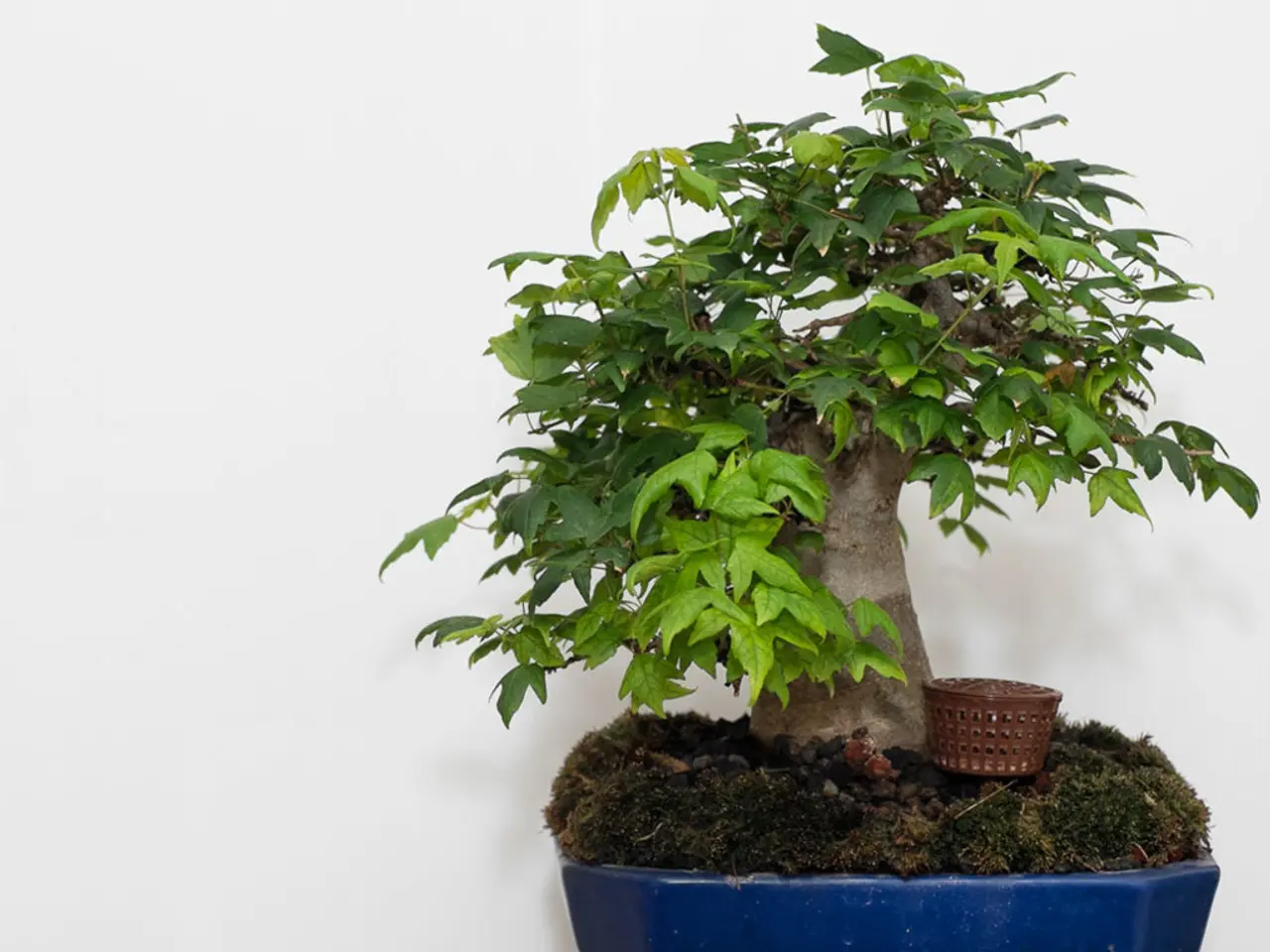
Bonsai Nourishment: Selecting the Ideal Fertilizer and Appropriate Application Technique
In the world of bonsai cultivation, providing the right nutrients is essential for maintaining a tree's health and vitality. Here's a comprehensive guide to bonsai fertilization, covering everything from the importance of timing to the differences between organic and inorganic fertilizers.
Timing is Key
Be mindful of fertilizer accumulation, as residual salts can build up in the soil over time. The timing of fertilizer application is crucial for bonsai well-being, with the right timing ensuring the tree receives necessary nutrients for growth.
- Spring is the time to fertilize a Bonsai with a balanced formula to promote healthy development. Fertilize immediately after repotting to provide essential nutrients for the Bonsai's recovery.
- During the growing season, when the Bonsai is most receptive to nutrients, fertilize every 2-3 weeks with a high-nitrogen formula to support foliage growth.
- Summer requires fertilizing every 2-3 weeks with a high-nitrogen formula to support foliage growth.
- Fall necessitates a switch to a low-nitrogen formula to encourage root development and prepare the Bonsai for dormancy. Winter should be avoided for fertilizing as the Bonsai is not actively growing.
- Avoid fertilizing during periods of stress, such as repotting or pruning.
Species and Growth Stage Considerations
The best types of bonsai fertilizers vary depending on the species and the growth stage of the tree. Many bonsai enthusiasts use bonsai-specific fertilizer blends, often Japanese formulations, that provide balanced nutrients suitable for bonsai cultivation through these stages.
- For rapid growth, young Bonsai require a higher nitrogen content for foliage development.
- During preparation for dormancy, formulations with reduced nitrogen and increased phosphorus and potassium to encourage root development and hardiness are ideal.
- Minimal fertilization or none, depending on species, is recommended for late autumn and winter.
Organic vs. Inorganic Fertilizers
Organic fertilizers, such as compost, well-rotted manure, and seaweed-based fertilizers, release nutrients slowly through microbial breakdown, supplying nutrients closer to the tree’s natural requirements and improving soil health. Inorganic (chemical) fertilizers, on the other hand, provide nutrients immediately and in known, concentrated proportions of N-P-K.
In bonsai cultivation, the nutrient compositions are usually balanced but may vary. Organic fertilizers tend to supply a broad spectrum of macro- and micronutrients and enhance soil microbial activity, while inorganic fertilizers allow precise dosing for particular growth stages but can result in salt buildup or nutrient imbalances if misused.
In sum, bonsai fertilization is best managed by using species-appropriate fertilization schedules with either bonsai-specific inorganic formulas for precision or organic options for sustainable, balanced nutrition. Many bonsai practitioners combine both approaches depending on the species and growth stage to optimize tree health.
References:
[1] Bonsai Empire. (n.d.). Bonsai Fertilizers Explained. Retrieved from https://www.bonsaiempire.com/bonsai-fertilizer/
[2] The Bonsai Garden. (n.d.). Organic vs. Inorganic Bonsai Fertilizers. Retrieved from https://thebonsaigarden.com/organic-vs-inorganic-bonsai-fertilizers/
[3] Bonsai Tonight. (n.d.). Bonsai Fertilizers: What, When, and How. Retrieved from https://www.bonsaitonight.com/fertilizer/
[4] The Bonsai Garden. (n.d.). Bonsai Fertilizer: A Comprehensive Guide. Retrieved from https://thebonsaigarden.com/bonsai-fertilizer-guide/
In the realm of bonsai cultivation, one may also find that proper nutrition extends beyond just the tree's health. Incorporating balanced meals and minimal processing are crucial in maintaining one's health-and-wellness as well.
Following a regular fitness-and-exercise routine and enjoying outdoor activities, such as gardening, can contribute to both physical fitness and the nurturing of one's home-and-garden, especially bonsai trees.
In our modern lifestyle, fashion-and-beauty trends are an essential part of self-expression. This includes caring for one's skin, hair, and overall appearance, using the latest gadgets and technology to aid in maintaining personal grooming routines.
Furthermore, technology plays a vital role in our daily lives, much like the pivotal function of gadgets in modern bonsai cultivation, such as specialized watering systems for perfect hydration. These technologies can make our lives easier, more efficient, and infuse a touch of science into both our homes and our hobbies, like bonsai, fitness, and self-care.