Crowds galvanized in Mexico City, taking to the streets in staunch opposition to urban renewal and rising property values.
In the heart of Mexico City, the July 4 protest of 2025, was a significant moment in the ongoing debate about the future of the city and its residents. The demonstration, organised by local residents and activist groups, underscored the growing frustration among citizens who feel marginalized by urban development trends and foreign investment.
The protest was mainly a demonstration of the increasing discontent towards the city's gentrification and urban development trends. It was a call to action for policymakers and city officials to address the issues of gentrification and displacement in Mexico City. The protest highlighted the ongoing issues with housing inequality and cultural shifts in the city.
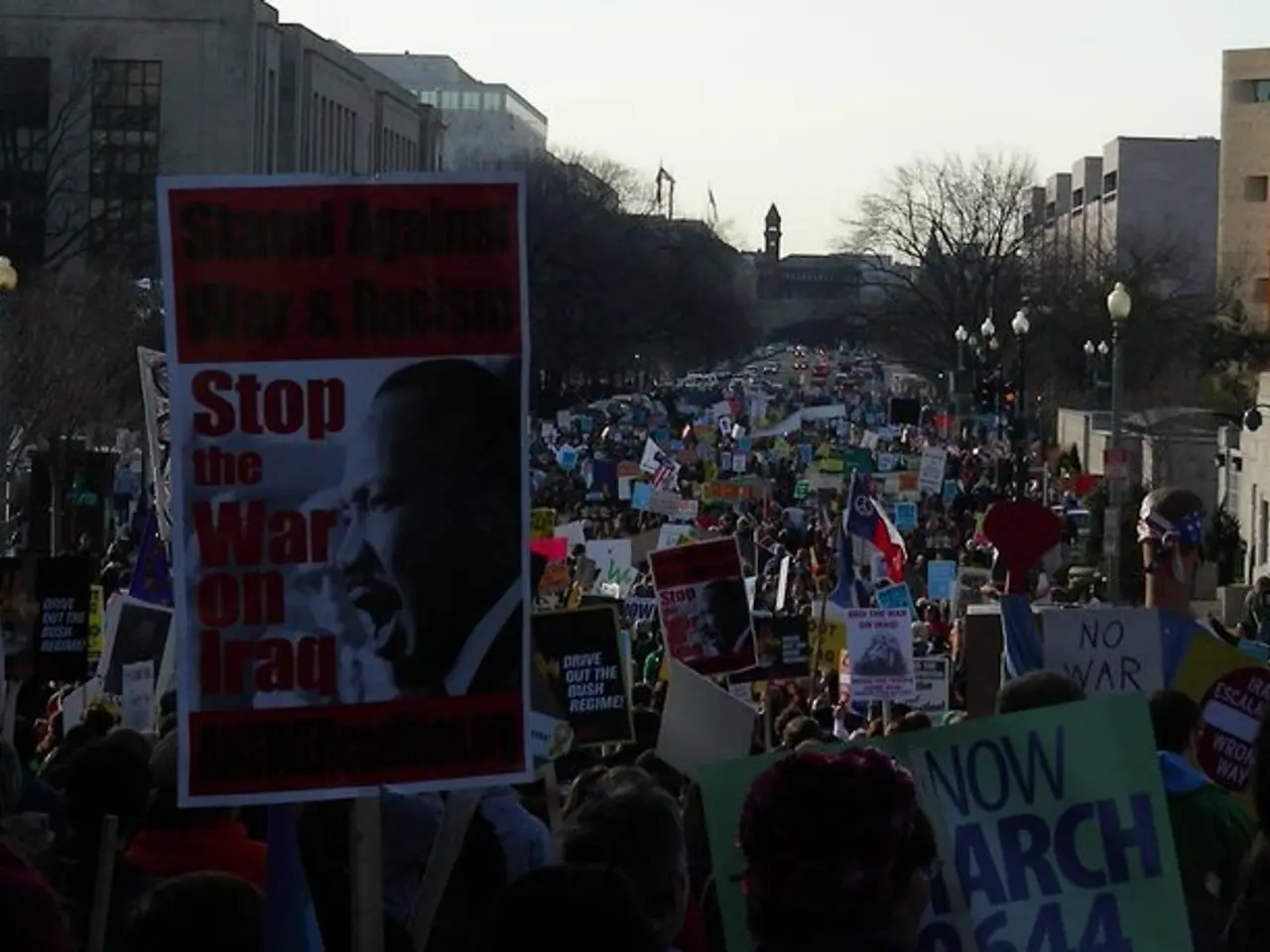
The march saw protesters carrying signs with slogans such as "Housing is a right, not a commodity" and "Mexico for the Mexicans". As the march progressed, tensions escalated and a group of masked individuals vandalized storefronts, including a Starbucks and several upscale restaurants. Windows were shattered, graffiti was sprayed on walls, and a clothing store was reportedly looted.
The protest brought attention to the ongoing issues of marginalization and displacement of residents due to urban development and foreign investment. The xenophobic incidents, including hostile graffiti and physical attacks on people perceived as foreigners, were condemned by Mexican President Claudia Sheinbaum.
Rent prices have more than doubled in recent years, reaching over $800 per month on average in a city where the average wage is around $400. Protesters demanded an end to gentrification and government policies supporting luxury real estate developments, while calling for affordable housing policies for locals.
The July 4 protest, though marked by violence and xenophobic incidents, served as a flashpoint in the broader debate over who gets to call Mexico City home. Subsequent protests were called by anti-gentrification activists for later dates, indicating that the movement continued beyond July 4.
Officials anticipated further challenges in controlling vandalism and unrest during these events, particularly with anti-foreigner sentiment focused on U.S. residents. Meanwhile, the city authorities announced preliminary plans to address gentrification following the protests, although activists remained critical of the government’s past failures to tackle the root causes of displacement and housing insecurity.
In summary, the July 4 protest highlighted deep social discontent related to housing issues in Mexico City but also escalated to violence and xenophobic incidents, complicating both public perception and government responses. The underlying concerns of housing affordability, displacement, and cultural shifts remain central issues in the ongoing debate about the future of Mexico City and its residents.
- The increase in foreign investment in Mexico City's urban development has raised concerns about individuals being displaced from their homes, leading some protesters to demand a shift in government policies, favoring affordable housing.
- The aftermath of the July 4 protest highlighted the connection between the issue of gentrification and changes in the city's lifestyle, as residents demonstrating against urban development trends also sought to preserve their home-and-garden way of life in Mexico City.