Differences Between Hares and Rabbits: Ear Distinctions, Speed Comparison, and Social Dynamics
In the vast expanse of nature, two creatures from the same family, the Leporidae, lead remarkably different lives. These are hares and rabbits, each adapted to their unique ecological niches.
Hares, distinguished by their longer legs, ears with black markings, and a scruffier appearance, are more solitary animals. They spend most of their time above ground, favouring open habitats where they can run fast to escape predators. In contrast, rabbits are more social and often live in burrows underground.
Biologically, hares belong to the genus Lepus, while most rabbits belong to other genera such as Oryctolagus. Hares are generally larger, with a distinct physical appearance that includes longer ears and legs.
The behaviour of these creatures also varies significantly. Hares are born fully furred and with open eyes, capable of immediate movement, while rabbits are born blind, hairless, and dependent on parental care for longer. Hares are ready to hop within hours of birth, while rabbits spend their first days hidden in cozy burrows lined with fur.
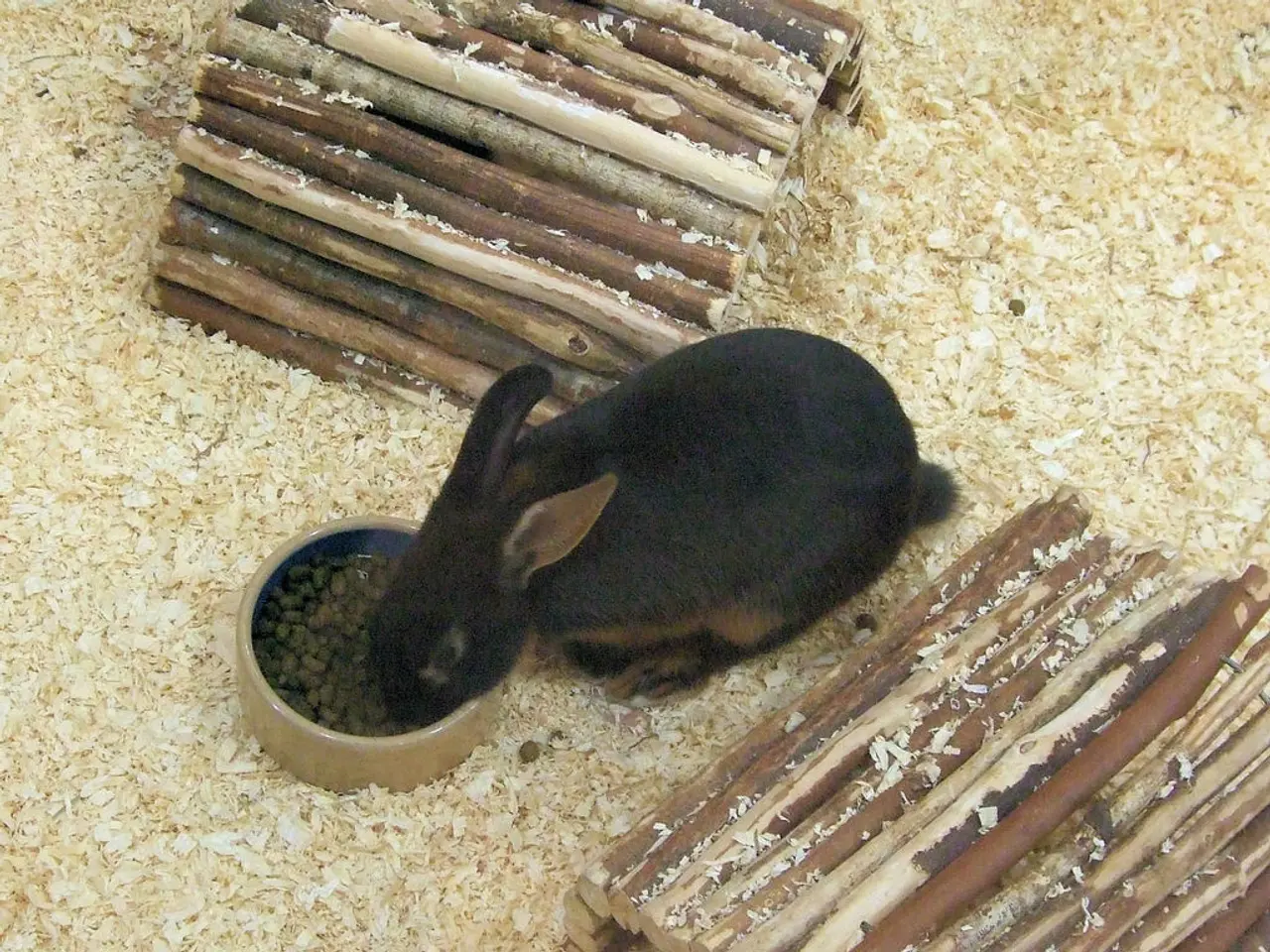
Both rabbits and hares share a vegetarian diet, consisting mainly of grass, hay, and leafy greens. However, domestic rabbits, unlike their wild counterparts, enjoy vegetables like carrots or parsley. It's important to note that domesticated rabbits still need hay to stay healthy.
When it comes to interaction, only a domesticated rabbit would be comfortable being held in your lap. Hares, being more aloof, rarely form groups and only pair up briefly to breed.
The origins of the Easter Bunny, often depicted delivering eggs, may have roots in hare behaviour due to their spring breeding and high energy. Young hares, known as leverets, are born with open eyes and a full coat of fur, unlike young rabbits, known as kits or kittens, which are born blind, hairless, and helpless.
In summary, hares lead a more solitary, open-habitat, fast-running existence, while rabbits are smaller, more social, burrow-dwelling animals. These differences reflect adaptations to different ecological niches within the same family Leporidae.
It's essential to remember that the actual bunny in your backyard or hutch is most likely a domesticated rabbit, not a wild hare. And while Jackrabbits, a type of hare, can reach speeds over 45 mph (70 km/h), rabbits rely on speed and camouflage for protection.
Whether in the wild or in our homes, understanding these differences provides a fascinating glimpse into the diverse world of these two creatures from the Leporidae family.
- Advancements in technology have enabled scientists to explore the difference in energy expenditure between hares and rabbits, with hares' larger bodies and long legs allowing them to run faster.
- In the realm of lifestyle and home-and-garden, keeping a domesticated rabbit might require creating a large, complex habitat complete with burrows, while a Jackrabbit, a type of hare, might need more space to run freely.
- The field of biology also shows that pets such as hares and rabbits, despite their similarities, have distinct differences, with hares being more adapted to spend their lives in the open spaces of the wild, while rabbits are more suited to underground burrows and social gatherings.