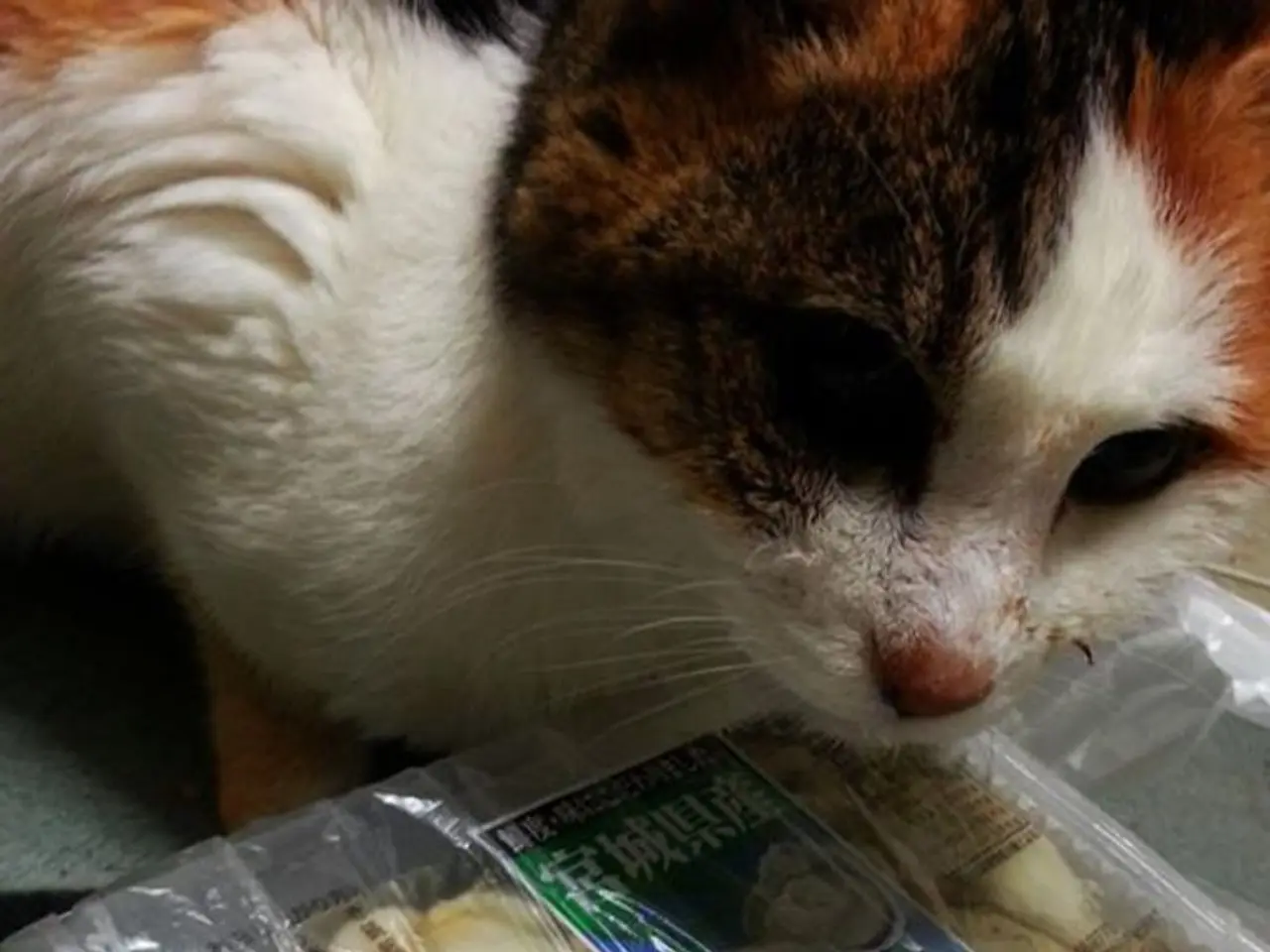
Stray cats in Cuba face food shortages amid escalating financial hardship
In the heart of Cuba, where the ongoing economic crisis has taken a toll on the nation, one group stands out in its efforts to provide shelter, food, and medical care for abandoned and street animals - Bienestar Animal Cuba (BAC-Habana). This independent animal welfare organisation conducts rescue and adoption campaigns, offers support in cases of cruelty and abandonment, and engages in legal and mediation actions to protect animals in need [1][2].
The Cuban government, despite providing vaccines, sterilization, and some free clinics for animals, lacks the capacity to shelter or feed street animals due to the economic crisis. Consequently, many activists and private citizens have taken on the responsibility of feeding and sheltering street cats and dogs, often struggling to meet demand [3].
One such individual is 81-year-old Nelida Perez, who feeds street cats in Old Havana, a popular tourist spot in the Cuban capital. Perez, who has been caring for these felines for years, relies on her own food or restaurant donations. However, as tourism declined and the economic situation worsened, it has become increasingly difficult for her to provide food for the cats [3].
Perez has witnessed instances of people mistreating, beating, and killing stray cats in Old Havana. Despite these challenges, she continues to find ways to feed the street cats she cares for [3].
Local volunteers and community members also play a crucial role. For example, Barbara Iglesias, a 51-year-old pharmacist, has adopted five dogs and rescued and found homes for a dozen others. Iglesias finds it difficult to get food for the animals she is caring for, but she perseveres [3].
Experts attribute the abandonment of animals in Cuba to factors such as rising food and medicine prices, migration, and a high mortality rate among older adults. As a result, many pet lovers in Cuba have turned their homes into shelters, but they are struggling to keep up with the demand and provide adequate care [3].
The average monthly salary on the island is about US$12. Annual vaccines for animals cost about US$20, and a vet visit is another US$10. Given these costs, many are forced to feed animals with alternatives like pig offal, chicken parts, or minced meat [3].
Annelie Gonzalez, a leader of the Aldameros Project, spends much of her income on caring for over 150 cats in a park in Havana's historic center. Gonzalez and her team began feeding 15 cats in Aldameros Park at the start of the COVID-19 pandemic and have since installed water pumps, pens for special cases, and cages for kittens [3].
No large-scale official shelters or government-run comprehensive care programs for street animals exist currently, leaving much of the support dependent on independent organisations like BAC and local volunteer efforts. Official data on the number of street cats and dogs in Cuba is unavailable [3].
While international initiatives focused on street cat and dog welfare in Cuba are limited, BAC continues to make a significant impact in the lives of these animals, providing hope amidst the challenges.
References:
[1] Bienestar Animal Cuba (BAC-Habana) website: https://www.bac-habana.org/ [2] El Nuevo Herald: Bienestar Animal Cuba (BAC-Habana) provides shelter, food, and medical care for street animals in Cuba: https://elnuevoherald.com/cuba/bienestar-animal-cuba-bac-habana-provides-shelter-food-and-medical-care-for-street-animals-in-cuba-4811151/ [3] The Guardian: In Cuba's economic crisis, animal welfare activists struggle to feed street cats and dogs: https://www.theguardian.com/world/2021/jun/22/cubas-economic-crisis-animal-welfare-activists-struggle-to-feed-street-cats-and-dogs [4] Al Jazeera: Cubans take matters into their own hands to help stray animals: https://www.aljazeera.com/news/2020/11/26/cubans-take-matters-into-their-own-hands-to-help-stray-animals [5] Animals Asia: About Animals Asia: https://www.animalsasia.org/about-us/
In the midst of Cuba's economic crisis, many homes have transformed into shelters for abandoned street animals, as individual citizens like Nelida Perez and Barbara Iglesias take it upon themselves to care for these animals. Despite the challenges, organizations like Bienestar Animal Cuba (BAC-Habana) persist in providing shelter, food, and medical care for these animals, making a significant impact in their lives.